Table of Contents
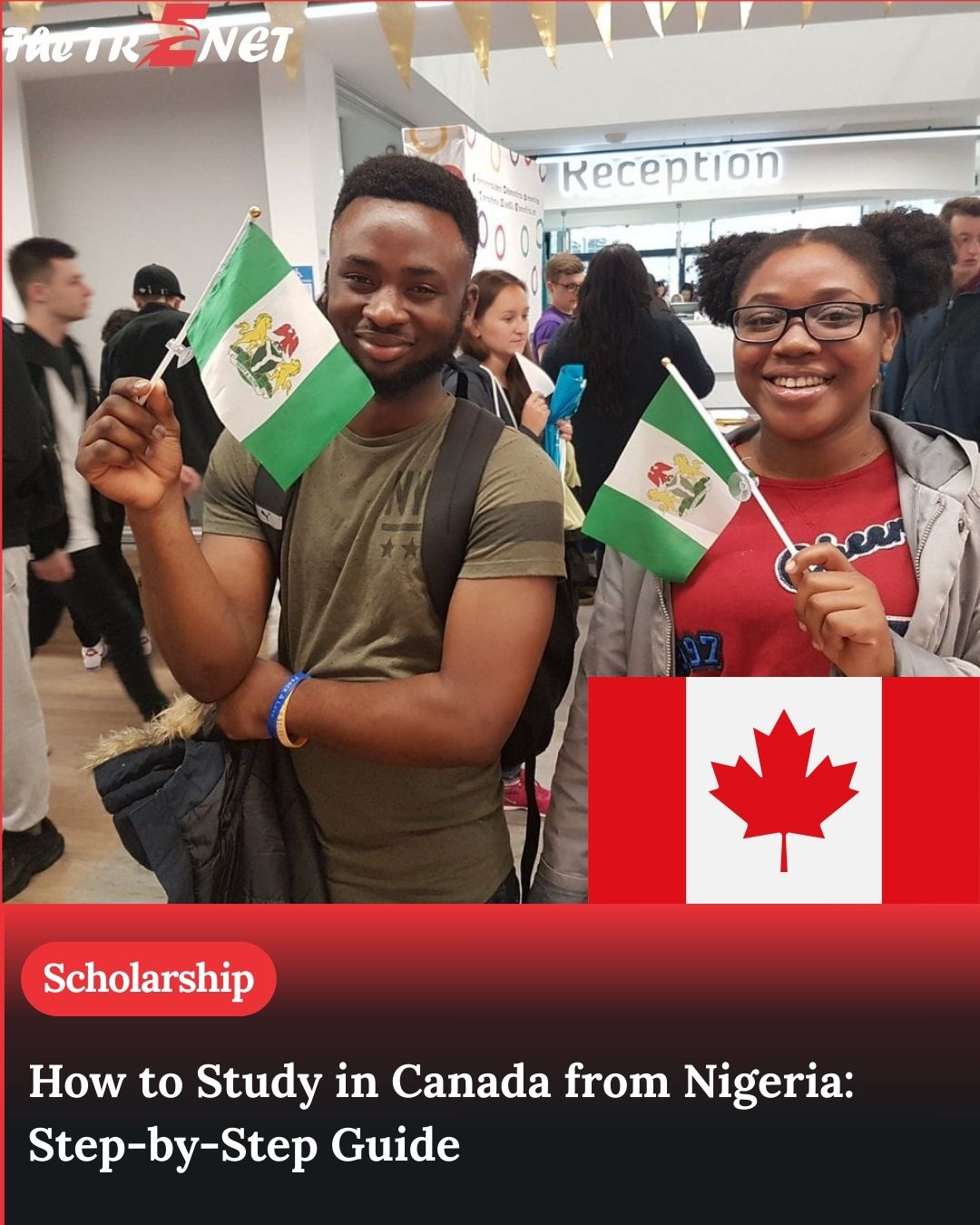
Studying in Canada has become one of the most reliable pathways for Nigerian students seeking quality education, global exposure, and long-term career opportunities. With world-class universities, flexible work options, and clear immigration policies, Canada continues to attract thousands of Nigerians every year.
This guide breaks down everything you need to know eligibility, application steps, documents, deadlines, common mistakes, and what to do if you miss out on scholarships explained clearly and accurately for Nigerian students.

Who Is Eligible to Study in Canada from Nigeria?
To study in Canada, Nigerian applicants must satisfy two major requirements:
- Admission into a Canadian institution, and
- Approval of a Canadian study permit (student visa).
A. School Admission Requirements
Eligibility depends on your level of study:
Undergraduate (Bachelor’s degree)
- Completion of secondary school
- WAEC, NECO, or SSCE results with competitive grades
Postgraduate (Master’s or PhD)
- A relevant university degree
- Official academic transcripts
Read also Fully Funded Scholarships for Nigerians in 2026 (No IELTS Required)
English Language Requirements
Most Canadian institutions require proof of English proficiency, such as:
- IELTS Academic (usually 6.0–7.0 overall)
- TOEFL iBT (around 80–100)
- Duolingo English Test (accepted by many schools)
👉 Some schools may waive English tests if your previous education was fully taught in English.
Study Permit (Visa) Eligibility for Nigerians
After gaining admission, you must qualify for a Canadian study permit. Key requirements include:
- A Letter of Acceptance (LOA) from a Designated Learning Institution (DLI)
- Proof of funds covering tuition, living expenses, and return travel
- Current benchmark: about CAD 22,895+ per year, excluding tuition
- A valid Nigerian passport covering your study duration
- Biometrics (fingerprints and photograph) at VFS Global in Lagos or Abuja
- Medical examination, if requested by immigration authorities
📋 Step-by-Step Application Process
Step 1: Choose Your Program and School
- Research courses that align with your academic background and career goals
- Confirm the institution is a Designated Learning Institution (DLI)
- Apply to 2–3 schools to increase your chances
⚠️ Admission from a non-DLI school will lead to automatic visa refusal.
Step 2: Prepare Your Documents
Academic Documents
- WAEC/NECO/SSCE results
- University transcripts and certificates
- English test results (IELTS/TOEFL/Duolingo)
Personal & Visa Documents
- International passport
- Passport photographs
- Birth certificate
- Statement of Purpose (Study Plan)
Financial Documents
- Bank statements (last 4–6 months)
- Sponsor letters or education loan documents
- Fixed deposit or GIC (optional but helpful)
Supporting Documents
- Reference letters
- CV (mainly for postgraduate applicants)
- Medical exam records (if requested)
✅ Tip: Always keep both hard and soft copies of all documents.
Step 3: Apply to the School
Most Canadian schools accept online applications:
- Create an account on the school’s portal
- Fill in your details carefully
- Upload required documents
- Pay the application fee (usually CAD 100–200)
- Submit and monitor your application
Admission Outcomes
- Conditional offer – may require tuition deposit or missing documents
- Unconditional Letter of Acceptance (LOA) – required for visa application
Step 4: Apply for the Canadian Study Permit
- Create an account on the IRCC (Immigration, Refugees and Citizenship Canada) portal
- Complete the study permit application form
- Upload LOA and supporting documents
- Pay required fees:
- Study permit: CAD 150
- Biometrics: CAD 85
- Book and complete biometrics at VFS Global
- Submit and track your application online
Step 5: Wait for a Decision
- Processing time for Nigerians typically ranges from 8 to 24 weeks
- Timing depends on application volume and document completeness
If approved, you will receive:
- Port of Entry (POE) Letter of Introduction
- Temporary Resident Visa (TRV) in your passport, if required
Deadlines and How to Track Them
Canadian School Intakes
Canada operates three major intakes:
- Fall (September) – most popular; apply January–March
- Winter (January/February) – apply August–September
- Summer (May/June) – limited programs; apply December–January
👉 Start planning 6–12 months early.
Visa Application Timeline
- Apply 4–6 months before resumption
- Track progress via your IRCC online account
Scholarship Deadlines
- Most Canadian scholarships close between October and February
- Deadlines vary by institution and funding body
Common Mistakes Nigerian Students Make
Avoid these frequent errors:
- Applying too late
- Submitting incomplete or inconsistent documents
- Choosing non-DLI institutions
- Presenting weak or unrealistic financial proof
- Applying to only one school
Each of these mistakes can lead to rejection or long delays.
Required Documents Checklist
For School Admission
- Academic certificates and transcripts
- English language test results
- Statement of Purpose and reference letters
For Study Permit
- Letter of Acceptance (LOA)
- Valid international passport
- Proof of funds
- Biometrics confirmation
- Medical exam results (if required)
- Police clearance certificate (recommended)
What If You Miss the Scholarship Deadline?
Missing a scholarship does not end your study plans. You can still:
Explore Other Funding Options
- Provincial and government scholarships
- University-based awards
- Merit-based and need-based grants
Proceed and Apply for Aid Later
- Some schools allow students to apply for internal bursaries after resumption
Consider Education Loans
- Several Nigerian banks and private lenders offer study-abroad loans
Work While Studying
- Canadian study permits usually allow up to 24 hours per week off-campus
- Full-time work is allowed during scheduled breaks
Final Advice for Nigerian Students
- Start early and plan strategically
- Double-check every detail before submission
- Stay organized with timelines and checklists
- Work only with credible and verified education advisors
Studying in Canada is achievable with the right preparation and thousands of Nigerians are already proving it every year.
Get real time update about this post category directly on your device, subscribe now.
Discover more from The Trenet
Subscribe to get the latest posts sent to your email.

