
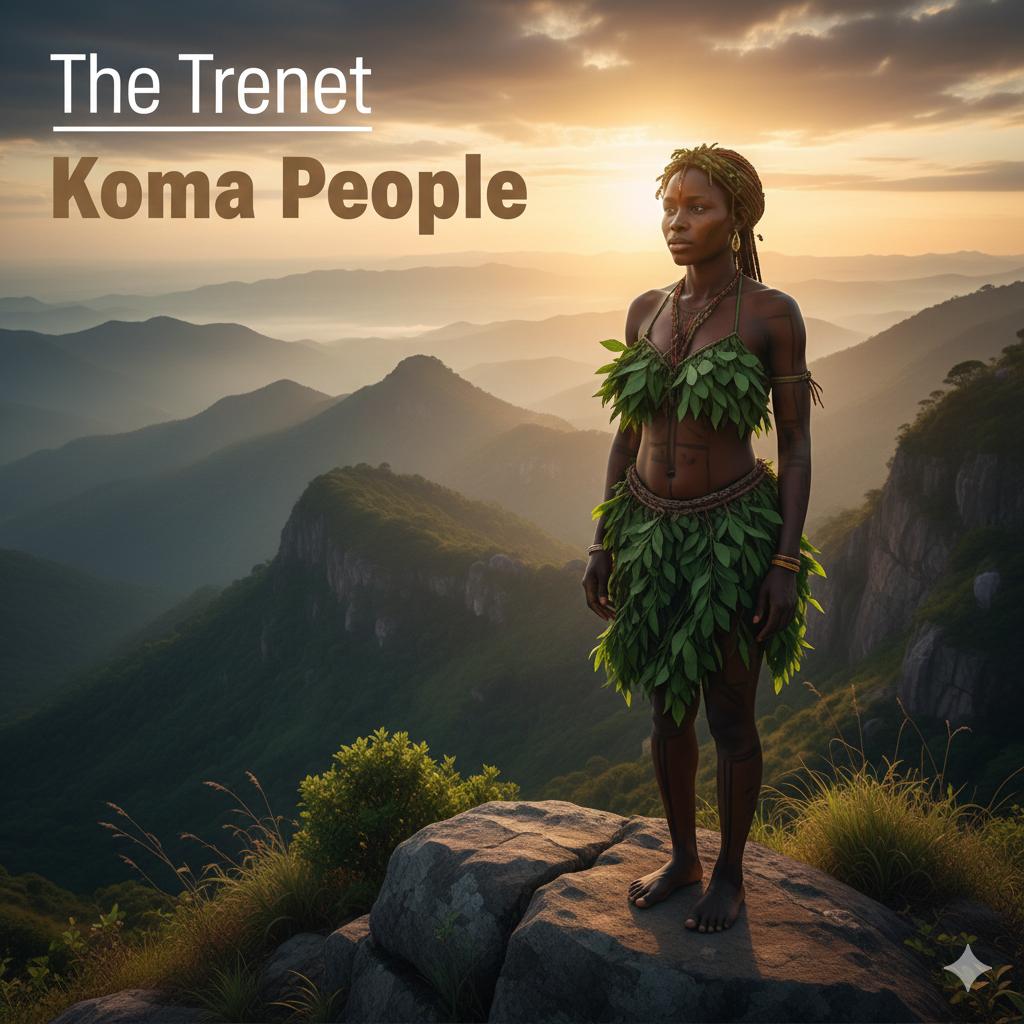

In a world connected by fiber optics and satellite imagery, it is almost impossible to imagine a community living in total seclusion. Yet, deep within the rugged peaks of the Alantika Mountains in Adamawa State, the Koma people thrived for centuries, untouched by the colonial era, the world wars, or the birth of modern Nigeria.
Often referred to as a “window into the soul of ancient Nigeria,” the Koma people remained a secret to the outside world until 1986. It wasn’t an explorer or a historian who found them, but a member of the National Youth Service Corps (NYSC) who stumbled upon their mountaintop civilization, changing the narrative of Nigerian anthropology forever.Nigeria’s Lost Tribe: The Koma Experience
The People “Allah Has Not Yet Arrived” To
The name of their home, the Alantika Mountains, tells a story of resistance. Derived from a Kanuri phrase meaning “Allah has not yet arrived,” it signifies their long-term, deliberate adherence to traditional animist beliefs despite being surrounded by the spread of Islam and Christianity during the 16th and 19th-century Fulani Jihads.
The Koma are not “primitive”; they are resilient. Their ancestors fled to the high-altitude terrain to escape conquest and slave raids, turning the jagged rocks into a fortress of cultural independence.
A Culture Woven in Nature
For the Koma, life is a rhythmic dance with the earth. When they were first “discovered” in the mid-80s, the women wore fresh leaves (tiye) as clothing, while men wore animal skins or loincloths. While some have since adopted modern attire, many hill-dwellers still hold to these ancestral fashions as a badge of identity.Indigenous Peoples and Minorities in Nigeria
Unique Traditions that Defy Time:
- The Seated Burial: Unlike the horizontal rest common in the West, the Koma bury their dead in a seated position. This allows the ancestors to “watch over” the living, ensuring a bridge between the physical and spiritual worlds.
- Animist Roots: They worship the supreme being, Zum, but interact with spirits found in trees, rocks, and the very air of the Alantika.Koma People Profile and History
Authentic Hospitality: Despite their reclusive history, those who brave the steep footpaths to reach their villages report a hospitality that is as pure as the mountain air.

The Struggle for Recognition
Why are the Koma less popular than the Yoruba, Hausa, or Igbo? The answer lies in the natural barriers of their home. With no roads, no electricity, and no internet for centuries, the Koma were effectively invisible to the Nigerian government until 1986.Koma: The Hill Dwellers of Adamawa
This late “exposure” led to many misconceptions. Early reports often labeled them as “Stone Age” people, a derogatory term that ignored their complex social structures and agricultural mastery of the steep slopes. Today, they face a new challenge: integrating into modern society without losing the soul of the Alantika.
As we explored in our previous article on the 2019 elections, Nigeria is a nation of diverse voices. The Koma voice is one of the oldest, reminding us that progress is not just about technology, but about the preservation of the human spirit.

Get real time update about this post category directly on your device, subscribe now.
Discover more from The Trenet
Subscribe to get the latest posts sent to your email.

