
Table of Contents
Long before the name Nigeria emerged in 1897 and decades before the 1914 amalgamation, the Ijaw people were already settled across the creeks and coastline of the Niger Delta.
Historical linguistics and oral traditions place Ijaw presence in what is today southern Nigeria as far back as 800–1000 AD. By conservative scholarly estimates, that means the Ijaw have lived continuously in this territory for over 1,000 to 1,200 years.
Today, they are widely recognised as the largest ethnic group in the Niger Delta region, both by geographical spread and population distribution across multiple states.
Nigeria as a country is just over a century old. The Ijaw story stretches back a millennium.
Ancient Roots in the Delta (c. 800–1000 AD)
Linguistic research into the Ijoid language family suggests proto-Ijaw communities were firmly established in the central Niger Delta by around 800 AD. By 1000 AD, structured clan-based settlements existed across present-day:
- Bayelsa State
- Rivers State
- Delta State
- Ondo coastal areas
These settlements developed decentralised governance systems built around clans, elders and merchant-warriors. Unlike the empire-building cultures of the savannah belt, the Ijaw did not pursue territorial conquest. Instead, they mastered the waterways.

Water became their defence, their economy and their identity.
By the time the Benin Empire rose to prominence, Ijaw communities were already entrenched in the Delta. They later witnessed the expansion of Oyo, the Sokoto Caliphate, and eventually British colonial rule yet retained their cultural core.
City-States and European Contact (1400s–1800s)
Portuguese traders reached the Niger Delta in the late 1400s. By the 1500s, Ijaw coastal settlements were integrated into Atlantic trade networks.
Between the 17th and 19th centuries, powerful Ijaw city-states such as Bonny, Brass and Nembe controlled maritime trade routes. Initially active in the transatlantic slave trade, they later pivoted strategically to palm oil commerce after Britain abolished slavery in 1807.
That adaptability ensured survival.
Ports flourished. Merchant elites emerged. Diplomatic ties strengthened. By the time Britain formalised the amalgamation of Nigeria in 1914, the Ijaw had been in the region for nearly a thousand years.
Integration and the Story of King Jaja
One of the most remarkable chapters in Ijaw history is the story of King Jaja of Opobo.
Born outside Ijawland and sold into slavery as a child, Jaja was brought to Bonny, an Ijaw kingdom, as it is part of their tradition to adopt anyone who they love and also give him or her ownership of their estate(s) Jaja became a beneficiary also choose to stick with the name of his master/adopted father (Jaja).
Through intelligence and leadership, he rose within the trading system. In 1870, following internal political disputes, he founded Opobo, not an empty settlement but he established it to become a force that could not be discarded by the other trading families and clans, more or less he became Opopo’s first merchant warrior/chief, elevated the status of the Opopo people thus was made their first king and recognised by Bony and other clans.

Though not Ijaw by birth, Jaja chose to identify fully with the Ijaw people. Belonging was defined by loyalty and shared destiny. Under his leadership, Opobo became a dominant palm oil power. When he resisted British interference in trade, he was exiled in 1887.
His story reflects a broader Ijaw tradition of integration absorbing outsiders and transforming them into stakeholders.
Geographical Spread and Dominance in the Delta
As the largest ethnic nationality in the Niger Delta, the Ijaw are spread across:
- Bayelsa State
- Rivers State
- Delta State
- Ondo State
- Akwa Ibom State
- Parts of Edo and Cross River States
In Rivers State, significant Ijaw populations exist across old Port Harcourt, including areas stretching from Odili Road to Trans Amadi. In several local government areas, estimates suggest Ijaw populations range between 50 and 70 per cent.
Warri in Delta State also has substantial Ijaw communities alongside Itsekiri and Urhobo groups.
Oil, Gas and National Contribution
The Niger Delta predominantly inhabited by Ijaw communities forms the backbone of Nigeria’s oil and gas industry.
Bayelsa and Rivers States account for a significant share of Nigeria’s crude oil production. The majority of Nigeria’s proven oil reserves lie within the broader Niger Delta, where Ijaw communities occupy large territories.
Nigeria derives over 70 per cent of government revenue from oil and gas, much of it sourced from Ijaw land.
This reality has shaped decades of political agitation, environmental activism and demands for resource control.
Traditions, Spirituality and Cuisine
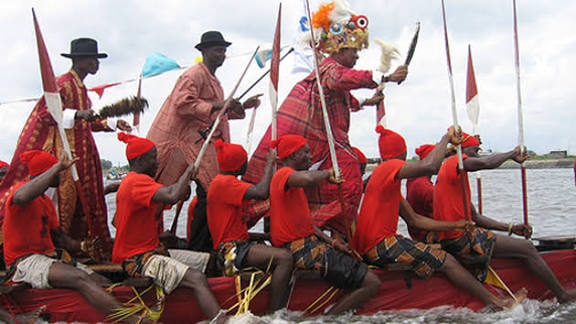
Ijaw traditional spirituality centres on water deities, ancestral reverence and masquerade traditions. Clan loyalty remains strong. Age-grade systems and initiation rites reinforce communal bonds.
Fishing defines daily life and culinary identity.
Traditional dishes include:
- Onunu: pounded yam blended with ripe plantain, eaten with spicy fish pepper soup.
- Kekef: a seafood delicacy made with periwinkles.
- Fresh fish pepper soup.
- Banga soup in certain communities.
For the Ijaw people the river sustains both livelihood and language.
Prominent Ijaw Figures
The Ijaw have produced influential Nigerians across politics, culture and global platforms:
Goodluck Jonathan: President of Nigeria from 2010 to 2015.
Burna Boy: Grammy-winning Afrofusion artist.
Agbani Darego: First Black African Miss World.
Their contributions span governance, entertainment, diplomacy and global representation.

A People Who Endured
From approximately 800–1000 AD to the present day, the Ijaw have maintained continuous presence in the Niger Delta for over a millennium.
They witnessed empires rise. They encountered European traders. They endured colonial restructuring. They became central to Nigeria’s oil economy.
Through it all, they remained themselves.
History often celebrates conquest. The Ijaw legacy celebrates endurance and as the largest ethnic group in the Niger Delta, their influence continues to shape Nigeria’s political, economic and cultural future.
Get real time update about this post category directly on your device, subscribe now.
Discover more from The Trenet
Subscribe to get the latest posts sent to your email.

