
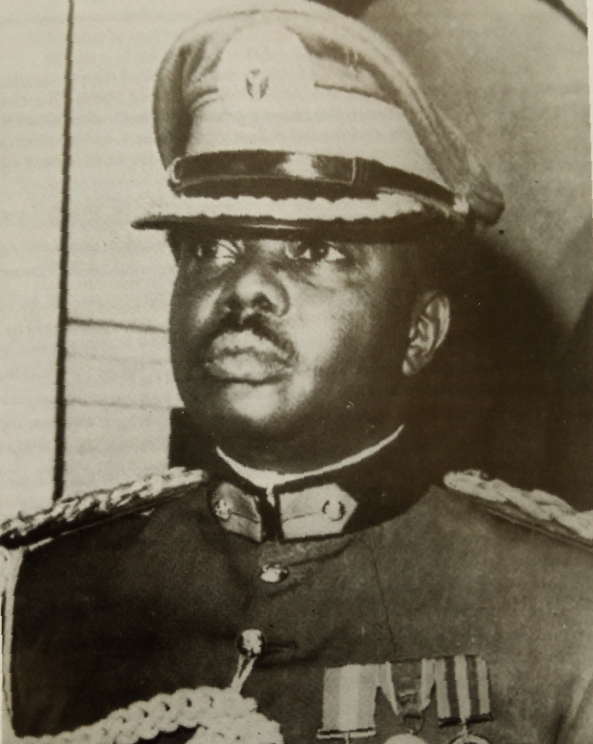
On the morning of February 13, 1976, Lagos stirred awake to its usual rhythm. Commuters battled early traffic, offices prepared for another busy day, and military patrols moved routinely across the city. Nothing hinted at the national trauma that was about to unfold. Before the day was over, Nigeria would lose one of its most influential leaders, General Murtala Ramat Mohammed, in a brazen assassination that took place in broad daylight.
General Murtala Mohammed was known for his simplicity and firm discipline. Unlike many military rulers of his time, he preferred a modest convoy, rejecting the heavy protection that often surrounded heads of state. At about 8:00 a.m., he left his home in Ikoyi on his way to Dodan Barracks, following his regular route. There were no warnings, no alerts, and no sign of danger until his convoy approached the quiet intersection of 2nd Avenue and 7th Avenue in Ikoyi.

What happened next remains one of the most dramatic moments in Nigerian history. As his black Mercedes Benz approached the junction, soldiers loyal to Lt. Colonel Buka Suka Dimka suddenly blocked the road with a military truck. Without hesitation, they opened fire, unleashing a barrage of bullets that tore through the vehicles. The attack lasted less than a minute, but its impact would echo for decades.
Murtala Mohammed was killed instantly. His aide-de-camp, Lt. Akintunde Akinsehinwa, and the driver also lost their lives. Eyewitnesses later described the scene as swift, shocking, and brutally efficient. A young, energetic leader whose reforms were reshaping the country was gone at just 37 years old.
News of the attack spread rapidly, plunging Lagos into panic. Streets emptied as residents fled for safety. Markets closed abruptly. Offices were abandoned in confusion. Rumours swept across the city shots fired near Ikoyi, soldiers taking over media stations, bridges being blocked, ministers fleeing their offices. No one knew who was in control, and for hours, uncertainty gripped the nation.
By mid-morning, Dimka and his men seized the Nigerian Television Authority and broadcast a coup announcement, attempting to consolidate control. But senior military officers loyal to the government moved quickly. Lt. General Olusegun Obasanjo, Brigadier Shehu Musa Yar’Adua, and other commanders coordinated a response that overpowered the coup plotters. The uprising collapsed the same day. Dimka fled but was captured weeks later, tried, and executed for treason, according to military tribunal records and archival reports.
That evening, the nation received the heartbreaking confirmation on radio:
“The Head of State and Commander-in-Chief of the Armed Forces, General Murtala Ramat Mohammed, is dead.”
Nigeria entered a deep period of mourning. Thousands gathered in Kano for his burial, newspapers printed somber black headlines, and citizens wept openly in markets and homes. Even critics acknowledged that the country had lost a leader whose energy, bold policies, and uncompromising stance against corruption had begun reshaping Nigeria’s direction.
Historians note that the assassination marked a turning point in Nigeria’s political journey. It exposed the fragility of the early military era, redirected the nation’s leadership under Olusegun Obasanjo, and cut short reforms that many Nigerians believed could have transformed the nation more rapidly. The events of that February morning remain etched in the country’s collective memory, often cited in academic works and historical analyses of Nigeria’s political instability during the 1970s.
Nearly fifty years later, the echoes of that tragic day still linger. General Murtala Mohammed’s death was more than the loss of a leader it was the abrupt end of a vision for a more disciplined, progressive, and united Nigeria. And as historians and citizens continue to reflect on his legacy, one enduring question remains:
What path would Nigeria have taken if Murtala Mohammed had lived?
Sources:
- National Archives of Nigeria
- Federal Military Government Tribunal Records, 1976
- Historical accounts from the Nigerian media, 1976
- Documented eyewitness and military reports from the period
Get real time update about this post category directly on your device, subscribe now.
Discover more from The Trenet
Subscribe to get the latest posts sent to your email.

