
Table of Contents
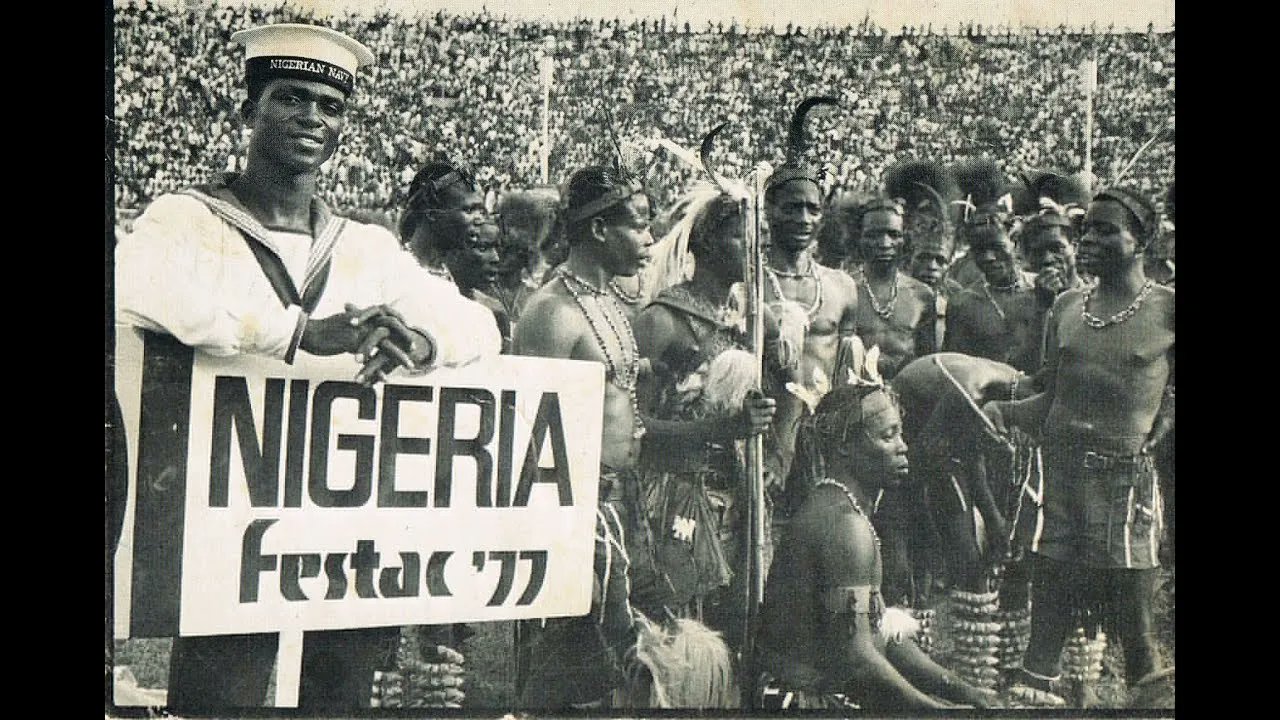
On 15 January 1977, Lagos did not wake up to breaking political news or economic shock. Instead, the city opened its doors to the world — not with speeches about power, but with music, art, dance, philosophy, and memory.
Nigeria was hosting FESTAC ’77 — the Second World Black and African Festival of Arts and Culture — and for nearly a month, the country stood at the centre of global Black civilisation.
It was a moment Nigeria has never fully repeated.
When Culture Became a National Statement
FESTAC ’77 was not organised for entertainment alone. It was a declaration.
At a time when African nations were still shaking off colonial identities, Nigeria chose culture as its loudest voice. The festival set out to answer a bold question: What happens when Black people from across the world gather to define themselves, without asking permission?
Nigeria was not merely hosting visitors. It was positioning itself as a cultural anchor for the African diaspora.
Lagos as the World’s Meeting Point
For 29 days, Lagos transformed.
Artists, historians, musicians, writers, dancers, and spiritual leaders arrived from Africa, the Caribbean, North and South America, and Europe. More than 50 countries were represented. Streets buzzed with languages, fabrics, rhythms, and ideas rarely seen together in one place.
For many participants, it was the first time they had set foot on African soil — not as tourists, but as returning descendants.
The Birth of FESTAC Town
To host the festival, Nigeria built an entirely new district: FESTAC Town.
It was designed as a self-contained city, complete with housing, roads, power supply, and social infrastructure. Beyond logistics, FESTAC Town symbolised permanence — proof that Africa’s cultural confidence was not temporary.
Today, FESTAC Town remains one of the most visible physical legacies of the festival, a reminder that culture can shape urban history.
Art, Identity, and the Power of Representation
What made FESTAC ’77 unique was not just its scale, but its intention.
Traditional African religions were openly discussed. Indigenous art forms were celebrated without apology. African history was told by Africans themselves, not filtered through colonial interpretation.
Music, sculpture, literature, and theatre became tools of reclamation — restoring dignity to identities that had been suppressed or distorted for centuries.
Nigeria’s Soft Power Moment
FESTAC ’77 marked the height of Nigeria’s cultural influence.
For once, Nigeria was not defined by oil, politics, or instability. It was defined by creativity, organisation, and leadership. Global media focused on African excellence, while Black intellectuals debated philosophy, history, and the future on Nigerian soil.
It was soft power in its purest form — influence earned through respect, not force.
The Echoes That Still Remain
Although FESTAC ’77 ended in February 1977, its impact never fully disappeared.
The festival strengthened pan-African thought, influenced Black identity movements worldwide, and laid intellectual foundations that modern African creatives still draw from today. Even contemporary Afrobeats, fashion, and diaspora collaborations carry traces of the confidence FESTAC projected.
Nigeria showed the world what was possible when culture was treated as national strategy, not decoration.
Why 15 January 1977 Still Matters
FESTAC ’77 stands apart in Nigerian history because it was not born from crisis. It emerged from vision.
On that day, Nigeria did not change governments or policies. It changed narratives — about Africa, about Black identity, and about what leadership could look like without politics at the centre.
Final Reflection
On 15 January 1977, Nigeria hosted more than a festival.
It hosted a conversation between past, present, and future.
For a brief moment, Nigeria reminded the world — and itself — that culture can unite, inspire, and redefine a nation.
That is why this day still matters.
Get real time update about this post category directly on your device, subscribe now.
Discover more from The Trenet
Subscribe to get the latest posts sent to your email.

