
Table of Contents
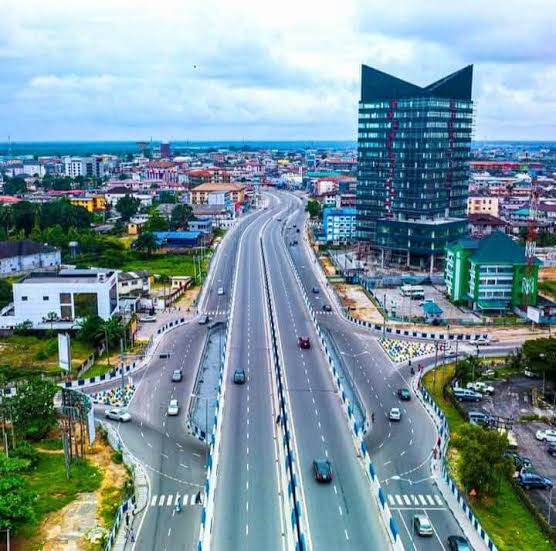
Port Harcourt is one of Nigeria’s most strategically important cities, shaped by trade, migration, and industrial expansion.
Situated in the Niger Delta, the city serves as the capital of Rivers State and a major economic centre.
Its historical development mirrors Nigeria’s journey through colonialism, independence, and modern industrial growth.
Pre-Colonial Communities and Indigenous Settlements
Before colonial intervention, the area consisted of established indigenous settlements and cultivated farmlands.
The Ikwerre, and Okrika (Ijaw) people dominated the region, sustaining themselves through fishing, farming, and trade.
Rivers and creeks connected these communities to wider Niger Delta commercial and cultural networks.
Land ownership and waterways held deep economic, spiritual, and social significance for indigenous inhabitants.
Colonial Foundation and the Birth of Port Harcourt
British colonial authorities founded Port Harcourt in 1912 to support coal exports from eastern Nigeria.
The discovery of coal in Enugu created the need for a deep-water port linked by rail.
Its location along the Bonny River provided natural advantages for shipping and maritime activities.
In 1913, colonial administrators officially named the city after Lewis Vernon Harcourt.
Railway Development and Early Economic Expansion
The completion of the Eastern Railway in 1916 transformed Port Harcourt into a major transport hub.
The railway connected the port directly to Enugu, ensuring efficient movement of coal and export goods.
Palm oil, timber, and agricultural produce flowed steadily through the port.
By the 1920s, Port Harcourt ranked among Nigeria’s most active colonial ports.

Oil Discovery and Post-Independence Transformation
The discovery of crude oil at Oloibiri in 1956 reshaped Port Harcourt’s economic direction permanently.
In 1958, the city handled Nigeria’s first commercial crude oil exports.
After independence in 1960, oil replaced coal as Nigeria’s primary export commodity.
Port Harcourt expanded rapidly as refineries, pipelines, and oil service companies emerged.

Civil War and Strategic Significance
During the Nigerian Civil War between 1967 and 1970, Port Harcourt became a strategic military target.
Control of the city meant access to vital oil infrastructure and export revenue.
Federal troops captured Port Harcourt in May 1968, shifting the war’s economic balance.
Although damaged, the city retained its national economic importance after the conflict.
Industrialisation and Urban Growth
From the 1970s, Port Harcourt experienced accelerated industrial and population growth.
The Port Harcourt Refinery at Alesa-Eleme strengthened the city’s industrial capacity.
The Trans-Amadi Industrial Estate attracted factories, skilled workers, and investors nationwide.
Migration from across Nigeria transformed the city into a densely populated urban centre.
Language, Diversity, and Urban Identity
Port Harcourt stands out as one of the few West African metropolis without an indigenous lingua franca, unlike other major cities Ibadan(Yoruba), Accra(Tiw), Kanu(Hausa), Lagos(Yoruba).
This is significant because Rivers State contains more than twenty-six distinct ethnic groups.
Rather than adopting one local language, residents communicate largely in Nigerian Pidgin English.
The city’s pidgin incorporates unique slang and expressions recognised across social classes.
This shared language reflects Port Harcourt’s migrant history and promotes urban unity.

Education, Culture, and Contemporary Development
The establishment of the University of Port Harcourt in 1975 strengthened the city’s educational profile.
Rivers State University and the University of Education further advanced scientific and technical education within the metropolis.
Music, media, and street culture flourished, shaping a strong urban identity.
Despite environmental and infrastructural challenges, the city remains dynamic and economically relevant.

Port Harcourt’s history reflects resilience, diversity, and economic transformation across different eras.
From a colonial export port, it evolved into Nigeria’s oil and industrial hub.
Its unique linguistic culture and multicultural population distinguish it within West Africa.
Today, Port Harcourt symbolises Nigeria’s complex past and continuously evolving urban future.
Get real time update about this post category directly on your device, subscribe now.
Discover more from The Trenet
Subscribe to get the latest posts sent to your email.

