
Table of Contents
On May 29, 1999, Nigeria changed direction.
After years of military governance, uncertainty, coups, and suspended democratic institutions, the country witnessed a historic transfer of power. For the first time in 16 years, a civilian president was sworn in, marking what is now remembered as the Nigeria Return to Civilian Rule.
Today, May 29 is more than just a date on the calendar. It represents hope, transition, political rebirth, and the beginning of Nigeria’s Fourth Republic.
But to truly understand the weight of the Nigeria Return to Civilian Rule, we must look back at what came before it.
Before 1999: Years of Military Dominance
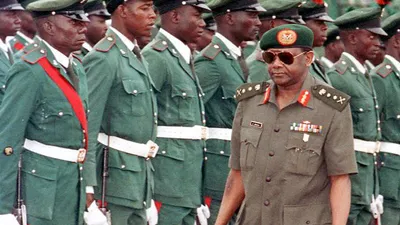
Nigeria’s political history between 1966 and 1999 was largely shaped by military regimes. Although there was a brief civilian period between 1979 and 1983, military coups repeatedly interrupted democratic governance.
The final stretch before the Nigeria Return to Civilian Rule was particularly turbulent.
The annulment of the June 12, 1993 presidential election, widely believed to have been won by MKO Abiola, plunged the country into political crisis. Civil unrest followed. International pressure intensified. Trust in governance weakened.
The years under General Sani Abacha further isolated Nigeria diplomatically. Human rights concerns drew global criticism, and sanctions affected the country’s international standing.
You can read a broader historical overview from the Council on Foreign Relations.
By the late 1990s, the appetite for democratic transition had grown both domestically and internationally.
The Transition Process
The turning point began after the death of General Sani Abacha in 1998. General Abdulsalami Abubakar assumed leadership and initiated a transition program aimed at restoring civilian governance.
Political parties were registered. Elections were scheduled. Campaigns began. Civil society became active again.

On February 27, 1999, presidential elections were held. Olusegun Obasanjo emerged victorious.
And on May 29, 1999, the Nigeria Return to Civilian Rule officially took place as Obasanjo was sworn in as president.
Details about Nigeria’s electoral history can be found on the official website of the Independent National Electoral Commission (INEC)
That inauguration marked the beginning of the Fourth Republic the democratic era Nigeria continues in today.
Why the Nigeria Return to Civilian Rule Mattered
The Nigeria Return to Civilian Rule was not just symbolic. It represented structural change.
1. Restoration of the Constitution
Nigeria adopted the 1999 Constitution, which reestablished democratic institutions, the executive, legislature, and judiciary.
2. Reopening of Civic Space
Media restrictions eased. Political discourse expanded. Civil society groups regained visibility.
3. Re-engagement with the World
International sanctions were lifted. Nigeria began rebuilding diplomatic relationships and re-entering global economic conversations.
The World Bank provides an overview of Nigeria’s governance and economic reforms during the democratic period here
The Nigeria Return to Civilian Rule restored Nigeria’s credibility on the global stage.
The Expectations in 1999
In 1999, expectations were enormous.
Nigerians hoped democracy would immediately deliver:
- Stable electricity
- Job creation
- Improved infrastructure
- Stronger currency
- Reduced corruption
- Better security

The Nigeria Return to Civilian Rule carried emotional weight. Many believed that once the military stepped aside, progress would accelerate rapidly.
But democracy, as Nigerians would learn, is a process, not an instant solution.
Democracy Is Not Magic
One of the biggest lessons since the Nigeria Return to Civilian Rule is that democratic governance does not automatically solve structural problems.
Corruption did not disappear overnight. Power supply challenges persisted. Economic inequality remained. Security concerns evolved rather than vanished.
However, democracy introduced accountability mechanisms.
Citizens could vote. Media could criticize. Opposition parties could challenge policies. Courts could interpret constitutional disputes.
Those checks and balances, though imperfect, distinguish the post-1999 era from military rule.
The Fourth Republic: Gains and Gaps
Since the Nigeria Return to Civilian Rule, Nigeria has conducted multiple general elections, 2003, 2007, 2011, 2015, 2019, and 2023.
Power has changed hands between parties. An incumbent president lost re-election in 2015, a significant democratic milestone. Electoral technology has evolved. Digital voter registration improved transparency.

You can explore Nigeria’s electoral data via INEC’s portal
Yet challenges remain.
Election disputes. Voter turnout fluctuations. Economic volatility. Security pressures.
The Nigeria Return to Civilian Rule created democratic structure, but democratic consolidation is still ongoing.
Young Nigerians and Democracy
Interestingly, over 60% of Nigeria’s population today was either very young or not yet born in 1999.
For many young Nigerians, the Nigeria Return to Civilian Rule is history, not lived experience.
They grew up in democracy. They did not experience military curfews. They did not witness decrees replacing constitutional rights.
This generational shift changes expectations.
Young Nigerians evaluate democracy differently. They measure it by:
- Job access
- Cost of living
- Digital freedom
- Governance transparency
To them, democracy must deliver tangible results.
Has Democracy Delivered?
That question continues to shape political debates.
Since the Nigeria Return to Civilian Rule:
There has been telecom expansion. Banking digitization. Startup ecosystem growth. Infrastructure investment in certain corridors.
But inflation has surged in recent years. Youth unemployment remains significant. Security challenges persist in multiple regions.
Economic indicators and macroeconomic updates are regularly published by Nigeria’s National Bureau of Statistics (NBS)
The data shows complexity, progress in some sectors, stagnation in others.
Democracy provided opportunity. Implementation determines outcomes.
The Symbolism of May 29
May 29 was celebrated for years as Democracy Day before being officially moved to June 12 in 2018 to honor the annulled 1993 election.
Yet May 29 remains deeply significant.
It was the day the Nigeria Return to Civilian Rule formally began.
It represents institutional continuity. It marks the end of prolonged military governance. It symbolizes civilian supremacy over armed authority.
For political historians, May 29, 1999 stands as one of Nigeria’s most important transition moments.
Lessons from the Nigeria Return to Civilian Rule
Looking back 25+ years later, several lessons emerge:
1. Institutions matter more than individuals.
2. Democratic culture takes time to mature.
3. Accountability strengthens governance.
4. Civic participation must remain active.
5. Democracy requires vigilance.
The Nigeria Return to Civilian Rule did not end Nigeria’s challenges.
But it changed the framework within which those challenges are addressed.
Why This History Still Matters
As new elections approach, remembering the Nigeria Return to Civilian Rule is not nostalgia.
It is perspective.
It reminds citizens that:
Voting rights were not always guaranteed.
Civil liberties were once restricted.
Political opposition once carried higher risks.
Democracy may feel frustrating at times. But it provides space for reform and civic voice.
That space did not always exist.
Final Reflection
The Nigeria Return to Civilian Rule in 1999 marked the beginning of a new chapter, one still being written.
Democracy in Nigeria remains imperfect. But it endures.
And endurance matters.
As younger generations debate policy, criticize leaders, and demand accountability, they do so within a framework established on May 29, 1999.
That date changed Nigeria’s political direction.
The responsibility now lies not just with leaders, but with citizens, to shape what democracy becomes next.
If You Enjoyed This Story
If you enjoyed this story, share it with someone who believes history shapes the future.
Subscribe to our blog for more deep dives into Nigeria’s politics, society, business, and culture, told from a Nigerian perspective.
Because understanding where we came from helps us decide where we’re going.
Get real time update about this post category directly on your device, subscribe now.
Discover more from The Trenet
Subscribe to get the latest posts sent to your email.

