
Table of Contents
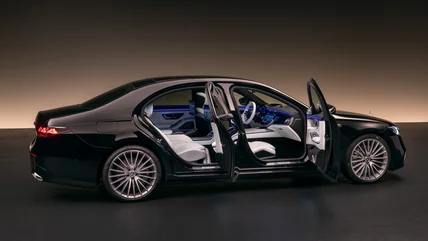
Mercedes-Benz has unveiled heated seat belts on the refreshed 2027 S-Class, marking a first for the automotive industry.
The feature debuts as part of the S-Class facelift, which includes changes to more than 2,700 components across the vehicle.
While the heated seat belts appear to be a luxury addition, Mercedes says they are designed with safety in mind.
More than comfort in cold conditions
The heated seat belts are available for front-seat occupants and work alongside existing heating features.
These include heated seats, steering wheels, door panels, armrests, and the brand’s well-known Airscarf system.
Using thin electrical filaments, the belts can warm up to about 111 degrees Fahrenheit within moments.
Drivers and passengers can activate the feature manually or allow it to switch on automatically in cold weather.
Mercedes describes the sensation as a “gentle, reassuring embrace” during cold starts and winter journeys.
How heated seat belts improve safety
Beyond comfort, the technology aims to encourage occupants to remove bulky winter clothing before driving.
Heavy coats can reduce the effectiveness of seat belts during sudden braking or a collision.

By warming the belt directly, occupants are less likely to rely on thick clothing for warmth.
In the event of an impact, the belt can then sit closer to the body, improving restraint performance.
Mercedes says this small behavioural change can significantly improve safety outcomes in cold climates.
Technology years in the making
Mercedes first showcased the concept in 2019 with its GLE-based Experimental Safety Car.
Seat belt supplier ZF has also been developing similar heated belt technology in recent years.
The S-Class is the first production vehicle to bring the idea to market.
A long history of seat belt innovation
The three-point seat belt was introduced by Volvo in 1959 and later shared across the industry.
Mercedes followed with seat belt tensioners on the W126 S-Class in 1980.
These became standard across the brand by 1984, tightening belts milliseconds before impact.
Further developments included force limiters, electronic tensioners, and the Pre-Safe system.
Mercedes later added inflatable seat belts, expanding protection across the chest during collisions.
Flagship remains a safety showcase
The current S-Class already features rear-seat inflatable belts and rear airbag deployment from seatbacks.
With heated seat belts, Mercedes continues to use its flagship model as a testing ground for new ideas.
The update reinforces the S-Class’s role as both a luxury benchmark and a safety technology leader.
The 2027 S-Class facelift is expected to reach global markets later this year.
Get real time update about this post category directly on your device, subscribe now.
Discover more from The Trenet
Subscribe to get the latest posts sent to your email.

