
Table of Contents
History does not always disappear.
Sometimes it is stolen.
Sometimes it is burned.
Sometimes it is rewritten.
In 1897, one of Africa’s most powerful and sophisticated kingdoms was reduced to smoke and ash. What followed was not just military defeat, it was cultural erasure.
This is the story of the Fall of the Benin Kingdom, the day an empire burned and the world pretended it was justified.
Before the Fire: A Kingdom of Power and Order
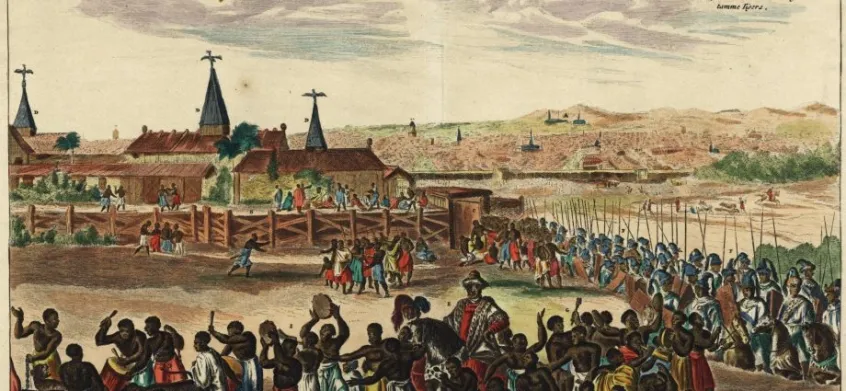
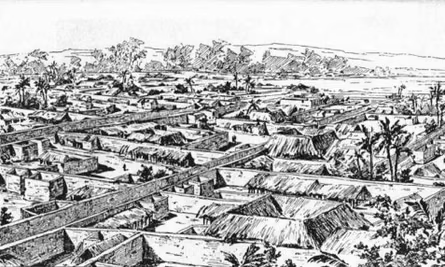
Long before colonial maps carved Africa into territories, the Kingdom of Benin stood as a structured, wealthy and highly organized state in what is now Edo State, Nigeria.
Benin was not a scattered village settlement. It was an empire with:
- A centralized monarchy
- A complex political hierarchy
- Highly skilled guilds
- Advanced urban planning
- Deep spiritual traditions
At the center of it all was the Oba, the sacred king, whose authority was political, spiritual and cultural.
The city of Benin itself stunned early European visitors. In the 15th and 16th centuries, Portuguese traders described its wide streets, massive walls and administrative structure. Some accounts even compared the city’s organization to European capitals of the time.
Yet the Fall of the Benin Kingdom would later be framed by colonial powers as the defeat of a “primitive” society.
But there was nothing primitive about Benin.
The Art That Shocked Europe
If Benin had only been politically powerful, perhaps its memory would have faded quietly. But it produced something extraordinary, art that forced the world to pay attention.
The famed Benin Bronzes, intricate plaques, sculptures and castings made from brass and bronze, documented royal history, court rituals and military victories.
These works were not decorative toys. They were historical archives in metal.
They told stories of:
- Kings and queens
- Warriors and diplomats
- Ceremonies and cosmology
- Trade with Europeans
When these pieces eventually reached Europe, scholars were stunned by their technical mastery. Some Europeans initially refused to believe Africans could have created them.
That disbelief would become one of the psychological foundations behind the Fall of the Benin Kingdom.
Because how could a people so “uncivilized,” as colonial propaganda claimed, create such brilliance?
The Tension Builds
By the late 19th century, British imperial expansion was aggressively moving inland from the coast.
Trade was the battlefield.
Benin controlled key trade routes and imposed restrictions that frustrated British commercial ambitions. The Oba resisted full British control and influence.
In January 1897, a British delegation led by Acting Consul General James Phillips attempted to enter Benin territory despite warnings not to proceed during a sacred festival period.
The delegation was attacked and several British officials were killed.
Britain called it an “ambush.”
But what followed was not diplomacy.
It was retaliation.
The Punitive Expedition of 1897
In February 1897, Britain launched what it termed a “Punitive Expedition.”
Nearly 1,200 heavily armed troops advanced toward Benin City.
The invasion was swift.
It was violent.
It was decisive.
Benin’s defenses were overwhelmed.
The city was captured. Then it was looted.
Then it was burned.
The Fall of the Benin Kingdom was not merely a military loss. It was a systematic dismantling of a civilization.
Royal compounds were destroyed. Sacred shrines were desecrated. Thousands of bronze works, ivory carvings and cultural artifacts were seized.
The Oba at the time, Ovonramwen Nogbaisi, was eventually exiled.
An empire that had stood for centuries collapsed in weeks.
Looted History: The Benin Bronzes Scattered Across the World
After the Fall of the Benin Kingdom, the looted artifacts did not stay in Africa.
They were auctioned, sold and displayed in European museums to offset the cost of the invasion.
Today, the Benin Bronzes are housed in major institutions such as the British Museum and the Ethnological Museum of Berlin, among others.

For decades, these artifacts were presented as “ethnographic curiosities” rather than stolen national treasures.
Imagine walking into a museum thousands of miles away and seeing your ancestral history behind glass. removed from context, detached from ritual, stripped of sovereignty.
That is one of the lasting wounds of the Fall of the Benin Kingdom.
Why Was This Story Softened in Education?
For many Nigerians, the Fall of the Benin Kingdom was reduced to a paragraph in secondary school textbooks.
Often, it was described simply as a British response to the killing of officials.
But history is rarely that simple.
Colonial narratives framed the invasion as necessary discipline, a civilizing mission. They minimized the cultural destruction and justified the looting as spoils of war.

Over time, that framing seeped into education systems.
The emotional weight of what was lost faded in public memory.
The burning of Benin became a footnote rather than a national trauma.
The Return of the Bronzes: A Slow Reckoning
In recent years, global pressure has mounted for the return of looted African artifacts.
Countries like Germany have agreed to begin returning some Benin Bronzes to Nigeria.

Museums are increasingly facing ethical questions:
- Who owns history?
- Can stolen art ever truly be neutral?
- Does possession equal legitimacy?
The conversation about restitution has revived interest in the Fall of the Benin Kingdom.
Because returning artifacts is not just about objects.
It is about dignity.
It is about acknowledgment.
It is about correcting a historical imbalance.
What the Fall Really Meant
The Fall of the Benin Kingdom reshaped the political structure of the region permanently.
British colonial administration absorbed Benin into its expanding protectorate system.
Traditional authority was weakened. Indigenous governance was subordinated.
Economically, trade autonomy disappeared.
Culturally, spiritual institutions were disrupted.
Psychologically, the message was clear: resistance would be crushed.
Yet despite the devastation, Benin did not disappear.
The monarchy survived. The Oba institution continues to exist today, a testament to resilience beyond conquest.
Why This Story Still Matters
Some may ask: Why revisit the Fall of the Benin Kingdom more than a century later?
Because history shapes identity.
When a people forget their depth, they begin to accept shallow narratives.
The story of Benin challenges stereotypes that Africa lacked structure before colonialism. It demonstrates that governance, art, diplomacy and engineering flourished long before European intervention.
Understanding the Fall of the Benin Kingdom restores context.
It reframes African history as complex and powerful, not passive.
It also forces modern conversations about ownership, justice and cultural memory.
Beyond Victimhood: A Story of Strength
Yes, the city burned.
Yes, treasures were stolen.
Yes, the kingdom fell.
But the people endured.
The bronze-casting tradition survives.
The royal lineage remains.
The cultural pride is alive.
The Fall of the Benin Kingdom is not just a story of loss, it is a story of survival.
And survival, in many ways, is its own form of victory.
Final Reflection
Empires do not vanish quietly.
They echo.
They whisper through artifacts in foreign halls.
They breathe through oral traditions.
They rise in renewed cultural pride.
The Fall of the Benin Kingdom was one of the most dramatic turning points in Nigerian history, a moment when fire attempted to erase identity.
But history has a stubborn memory.
And today, as debates over restitution continue and Nigerian youth rediscover their heritage, the story of 1897 no longer feels distant.
It feels unfinished.
Because remembering is resistance.
And telling the truth about the Fall of the Benin Kingdom is part of reclaiming it.
This is Forgotten Stories of Nigeria, where we revisit the moments deep history tried to soften.
If this story moved you, share it.
If it shocked you, research more.
If it made you proud, hold that pride firmly.
Follow The Trenet for more deep dives into Nigeria’s past, present and future.
Because some stories are not meant to fade.
And next week?
We uncover another one.
Get real time update about this post category directly on your device, subscribe now.
Discover more from The Trenet
Subscribe to get the latest posts sent to your email.

