Table of Contents
When you think of Northern Nigeria, images of majestic horses, royal turbans, and rows of warriors charging in perfect formation might come to mind.
That breathtaking display is the Durbar Festival, one of the most powerful cultural celebrations in Nigeria.
It is not just a festival.
It is history on horseback.
It is royalty in motion.
It is Northern pride on full display.
What Is the Durbar Festival?
The Durbar Festival is a grand cultural and religious celebration held mostly during Eid al-Fitr and Eid al-Adha in Northern Nigeria.
It features:
Hundreds of decorated horses
Royal processions
Traditional warriors
Cultural music
Colorful regalia
Public homage to the Emir
The festival is especially prominent in cities like:
Kano
Katsina
Zaria
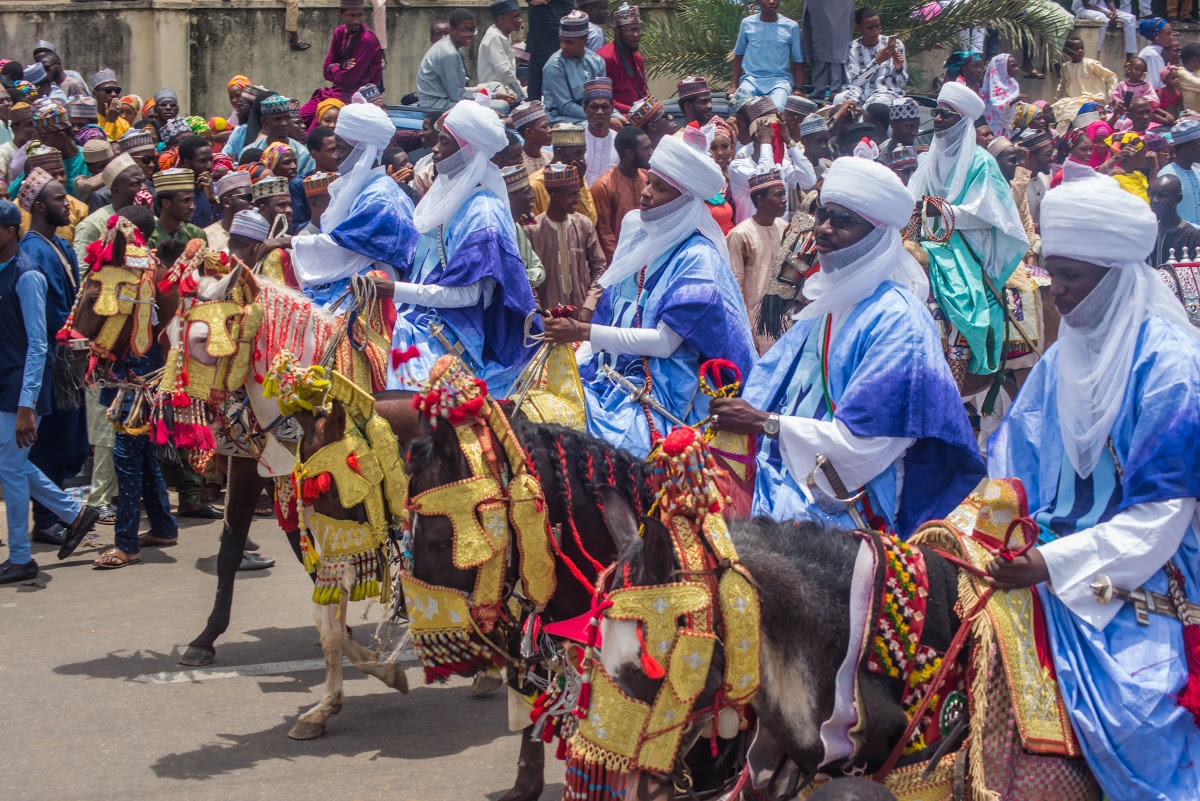
During the Durbar Festival, the Emir rides out in full royal regalia, surrounded by district heads and horsemen in dramatic formation.
If you’ve never seen it live, just imagine this:
Dust rising.
Horses galloping.
Crowds cheering.
Trumpets sounding.
Na serious goosebumps.
The Historical Roots of the Durbar Festival
The origins of the Durbar Festival trace back to pre-colonial Northern Nigeria, particularly within the old Hausa kingdoms.
It was originally a military parade.
Emirs would assemble cavalry forces to demonstrate strength, loyalty and readiness for battle. Over time, this display evolved into a ceremonial event held during Islamic celebrations.

When the British colonized Northern Nigeria, they retained the Durbar as part of indirect rule. It became a symbolic display of authority under colonial supervision.
Today, the Durbar Festival remains deeply tied to the traditional emirate system.
To understand Northern Nigeria’s emirate structure, you can explore historical insights from the National Archives of Nigeria
The Role of the Emir
At the heart of the Durbar Festival is the Emir.
The Emir represents traditional authority, cultural continuity and spiritual leadership.
During the Durbar Festival, the Emir appears in grand attire, flowing robes, turbans, sometimes holding a sword, riding a richly decorated horse.
District heads and title holders line up in hierarchical order to pay homage.
It is not chaotic.
It is organized.
It is dignified.
And it reflects centuries of structured leadership.
Horses: The True Stars of the Durbar Festival
Let’s talk about the horses.
Because honestly, they steal the show.
The horses used during the Durbar Festival are trained, powerful and elaborately decorated with:
Colorful embroidery
Beaded ornaments
Leather saddles
Silver and brass embellishments
Riders wear equally striking outfits.

When they charge toward the Emir in synchronized gallops and suddenly halt before him, that dramatic stop is one of the most thrilling parts of the Durbar Festival.
It symbolizes loyalty and discipline.
And the crowd? They roar.
Religion and the Durbar Festival
The Durbar Festival is closely tied to Islamic celebrations, particularly Eid.
After Eid prayers, the Emir and his entourage proceed to the palace in procession.
Islam shapes much of Northern Nigeria’s cultural identity, and the Durbar Festival reflects that spiritual foundation.
However, beyond religion, it also functions as a cultural heritage event open to locals and visitors alike.
The festival demonstrates how faith and tradition blend seamlessly in Northern society.
Colonial Influence and Transformation
During British colonial rule, the festival became a tool for political symbolism.
British officials often attended Durbar ceremonies to observe local leadership structures.
The parade became less about military readiness and more about ceremonial display.
Despite colonial influence, the Durbar Festival maintained its indigenous identity.
It adapted, but it did not disappear.
That resilience is part of what makes the Durbar Festival so culturally significant today.
Durbar Festival and Modern Tourism
In recent decades, the Durbar Festival has become a major tourist attraction.
Travelers from across Nigeria and beyond visit Kano and other emirate cities to witness the spectacle.
International media and cultural organizations recognize its importance. Cultural preservation efforts align with initiatives supported globally by bodies like UNESCO

Though the Festival is not yet officially listed as UNESCO Intangible Cultural Heritage, it stands as one of Nigeria’s strongest cultural symbols.
For Northern Nigeria, the festival is both heritage and economic opportunity.
Hotels fill up.
Markets buzz.
Local businesses thrive.
Cultural Pride and Northern Identity
The Durbar Festival is more than horses and royalty.
It is identity.
For many in Northern Nigeria, the festival reinforces pride in heritage and continuity of tradition.
In a country as diverse as Nigeria, with Yoruba, Igbo, Tiv and many other groups, this festival represents Northern unity and royal prestige.
If you enjoyed our deep dive into the Tiv people, you’ll notice a similar theme here: culture as strength, not just history.
This builds strong topical authority on Nigerian heritage.
Why the Durbar Festival Still Matters Today
Nigeria is modernizing fast.
Cities are expanding.
Technology is growing.
Global culture is influencing youth.
Yet every year, this Festival reminds Northern Nigeria of its roots.
Young boys watch the cavalry with wide eyes.
Families dress in traditional attire.
Communities gather in celebration.
It is intergenerational.
It is educational.
It is powerful.
In a time where many traditions fade, this festivals continues to command attention.
Final Thoughts
This festival stands as one of the most visually stunning and culturally rich celebrations in Nigeria.
It tells a story of power, loyalty, faith and tradition.
From its military origins to its modern-day tourism appeal, the Durbar Festival has evolved without losing its soul.
In a world chasing trends, Northern Nigeria holds onto something timeless.
And that timelessness rides on horseback.
Enjoyed This Story?
If this Durbar Festival story gave you goosebumps, like it gave me, abeg no ghost us 😄
Follow our blog for more deep Nigerian culture, history and powerful stories from across the country.
And make sure you connect with us on:Instagram | Facebook | X | LinkedIn
Let’s keep celebrating Nigeria, one story at a time.
Get real time update about this post category directly on your device, subscribe now.
Discover more from The Trenet
Subscribe to get the latest posts sent to your email.

