
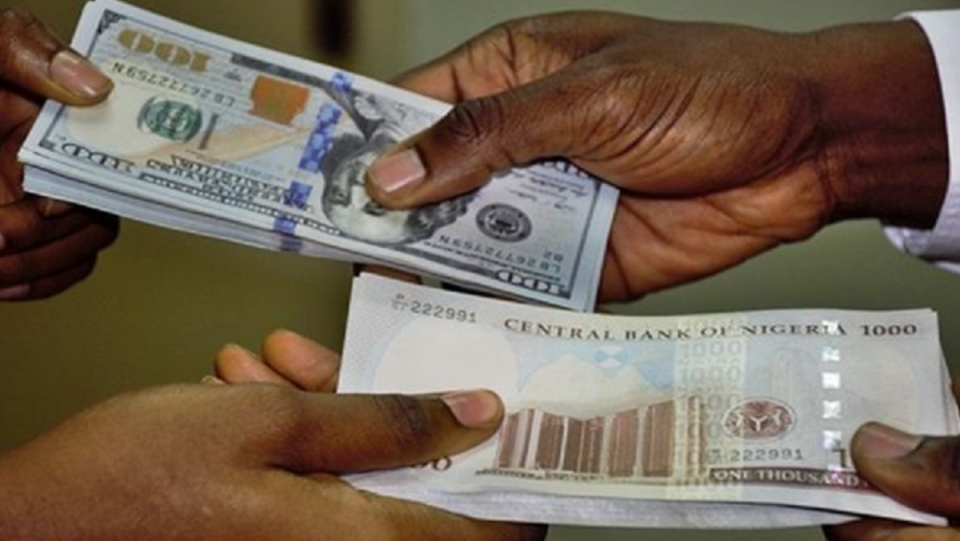
The Nigerian naira continued to trade on a stable footing across both the official and parallel foreign exchange markets on Thursday, January 8, 2026, as the Central Bank of Nigeria (CBN) sustains its reform-driven approach at the start of the new fiscal year.
Market data indicate that relative calm has persisted in the currency market, supported by improved liquidity conditions and cautious sentiment among traders.
Official market performance (NFEM)
At the Nigerian Foreign Exchange Market (NFEM), the naira opened trading with minimal volatility. Data from the FMDQ Securities Exchange showed the spot rate hovering around ₦1,427.52 per United States dollar.
The narrow trading band reflects a continuation of the trend recorded at the close of 2025, suggesting that recent measures by the apex bank to deepen transparency and improve price discovery are gaining traction.
Analysts attribute the stability partly to the CBN’s projection that Nigeria’s foreign exchange reserves could rise to about $51.04 billion by the end of 2026, driven by stronger crude oil receipts and increased diaspora remittances.
Parallel market trends
In the parallel market, also known as the black market, the naira traded at a mild premium but remained within a relatively stable corridor.
Checks among Bureau de Change (BDC) operators in Lagos and Abuja showed the dollar exchanging between ₦1,435 and ₦1,440 in early trading. The spread between the official and informal markets has continued to narrow compared with levels recorded earlier in 2025.
Market watchers note that the reduced gap aligns with the government’s broader objective of discouraging speculative demand and encouraging businesses to source foreign exchange through authorised channels.
Market drivers and outlook
Several factors are shaping the current performance of the local currency:
- External reserves outlook: Expectations of stronger reserve buffers have provided confidence to market participants.
- Domestic refining capacity: Increased output from local refineries, including the Dangote Refinery, is gradually reducing Nigeria’s dependence on imported petroleum products and the associated demand for foreign exchange.
- Policy consistency: Investors continue to respond positively to the CBN’s macroeconomic framework aimed at consolidating stability and moderating inflation over the medium term.
As trading activity builds momentum in the first full week of 2026, market participants remain alert to further interventions by the central bank, particularly in managing liquidity and sustaining confidence in the foreign exchange market.
Get real time update about this post category directly on your device, subscribe now.

